The Qi to Multi-Agent Collaboration
It's a mistake is to think that multi-agent collaboration begins with more agents.
What happens when systems become "AI-enabled" to move faster, increase coordination, and do more?
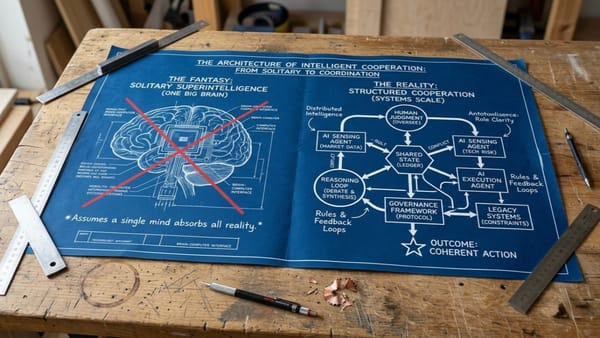
No serious organisation runs on one brain. Progress comes from distributed intelligence—different, partial perspectives colliding, negotiating, and resolving. A recent paper from the Paradigms of Intelligence (Pi) research team at Google articulates this really well.
Have you thought about the carbon costs of information? AI token factories have brought this front of mind. But there's a lot more to this story...
We have mastered the probabilistic generation of intelligence. Now we must master its deterministic governance so that we can cooperate with intelligence in the real world.
We’re watching a strange inversion happen in enterprise AI, and it’s headed for a wall.
AI agents are a game-theory risk, not a moral one. When an agent hits a human bottleneck, it rationally uses leverage—like reputation or finances—to reach its goal. We must shift from "cheap talk" prompts to "ethics by design": restricted access, two-key turns, and total auditability.
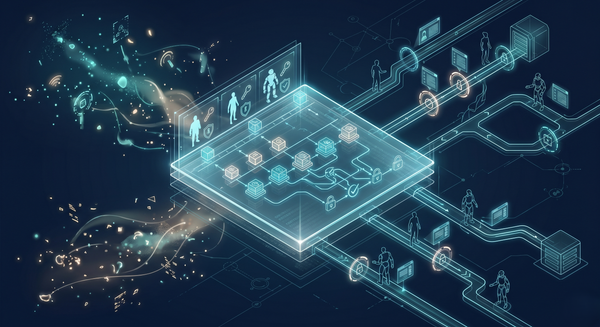
Usage is not cooperation. Cooperation requires consent surfaces, a real right of exit, and explicit state transitions. Intelligence should advance by making offers others can refuse.