Most workflow tools still expect you to think like a system integrator.
You open a blank canvas. You drag boxes. You connect arrows, define conditions, configure forms, and wire systems together by hand. That approach works fine when the process is simple and linear.
But real organisational work is rarely a neat diagram. It is intent, responsibility, context, memory, permissions, exceptions, and outcomes moving dynamically across people, agents, and systems.
Qi Flows starts there.
Instead of forcing a designer to manually assemble logic from scratch, Qi lets you describe what you want in plain language.
"Create a flow for onboarding a new supplier. Procurement collects documents, compliance checks sanctions, finance approves payment terms, and if risk is high, escalate to legal."
Or:
"Build a youth opportunity verification flow. The learner submits evidence, an evaluator agent checks completeness, a human reviewer verifies edge cases, and payment is released only when the claim is approved."
From that conversation, Qi generates a working Flow.
Not Just a Sketch. A Coordination Model.
Qi does not just draw a picture of a process; it proposes an operational structure. It outlines the stages, actions, roles, handoffs, rules, required evidence, and completion conditions. It lays these out directly in the Flow UI as executable blocks—with the right dependencies and state transitions already in place.
And then, the conversation continues.
- "Add a fraud check before payout."
- "Make the compliance review optional for low-risk suppliers."
- "Split this into separate paths for Zambia and South Africa."
As you speak, Qi updates the Flow conversationally, preserving logic and coherence across the entire system. The user is no longer drawing a process map. They are shaping an intelligent, cooperating system through language.
Multimodal Input: Meeting You Where You Are
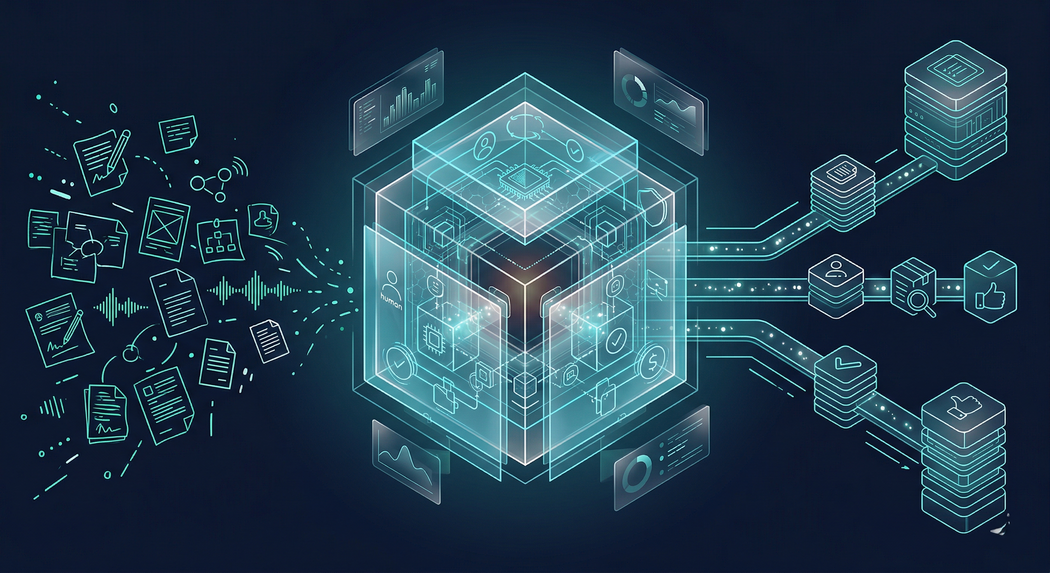
A Flow shouldn't need to start from a blank page. Business processes are often much easier to explain than they are to formally model. People know what should happen, but struggle to translate it into workflow logic.
Qi closes that gap by generating drafts from whatever context your organisation already has:
- A spoken description or message thread
- Standard Operating Procedure (SOP) documents or policy manuals
- Spreadsheets, forms, or task lists
- Existing Flow blueprints
The system accepts your messy human starting points and transforms them into a clean, structured draft.
AI Accelerates. Humans Govern.
Qi does not replace humans designing workflows; it accelerates them from intention to operational structure. Flow design is not merely a UX challenge—it is a governance imperative.
The human always remains in the driver's seat to decide:
- What authority each actor should hold
- Where human oversight and judgment are required
- What constitutes sufficient evidence
- How exceptions are handled and which outcomes matter
Because of this, the generated Flow is fully legible, inspectable, and editable. Every block is understandable, every permission is explicit, and every outcome is traceable.
 Dr Shaun Conway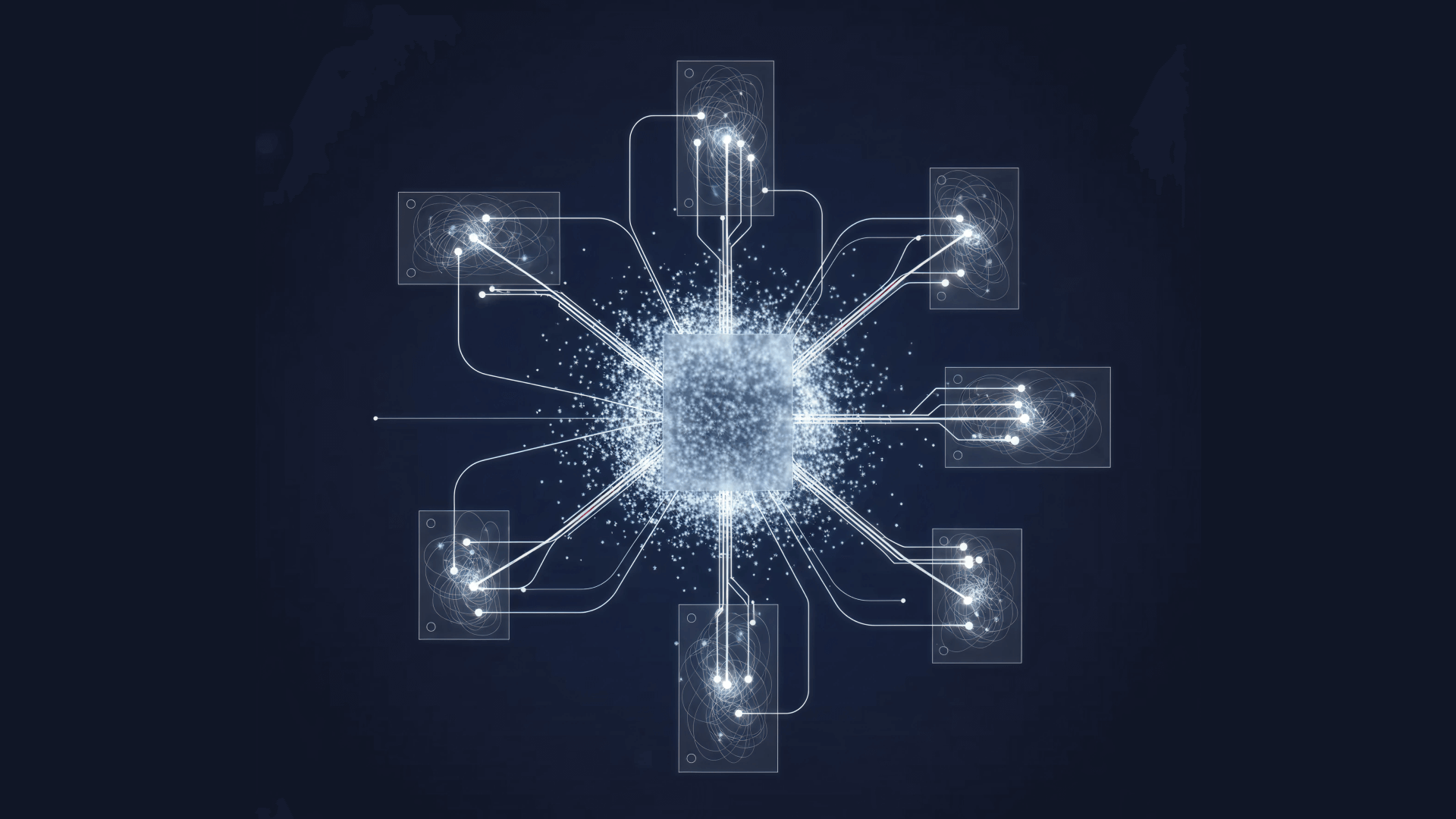
Qi Flows orchestrate humans and AI agents over this verifiable state.
From Generated Flow to Live Execution
The ultimate payoff of the Qi Flow Designer isn't mockup speed; it’s operational speed.
A generated Qi Flow moves directly into execution because its structure is already aligned to a rigorous runtime model. Blocks in the UI represent CRDT-backed shared state. Agents are assigned scoped capabilities. Humans are looped in exactly where judgment is needed. Claims are submitted as events occur, evidence is linked to decisions, and subsequent actions—like payments—are triggered instantly by verified state changes.
The bottleneck in modern organisations is no longer access to software. It is the time and skill required to convert institutional intent into working coordination logic.
Qi changes that. You describe the work. Qi generates the Flow. You refine it through conversation. Then, it runs.
This is a much more powerful idea than simply "AI builds workflows."
Qi lets organisations program how intelligence flows through their work.