Chat was the tutorial. It was an onboarding layer that taught the world machines can parse context and generate plausible output. But plausible output is not work. In a real system, a polished transcript does not mean you actually achieved anything.
The next phase is Outcome AI.
This shift happens the moment we stop asking if a model can answer a question, and start asking if a system can be trusted with an objective. Not a prompt. An objective. Something that actually changes the state of a workflow, a business, or the real world—in a way that can be measured, verified, and settled.
That is the real divide emerging right now: AI as conversational theater versus AI as accountable infrastructure.
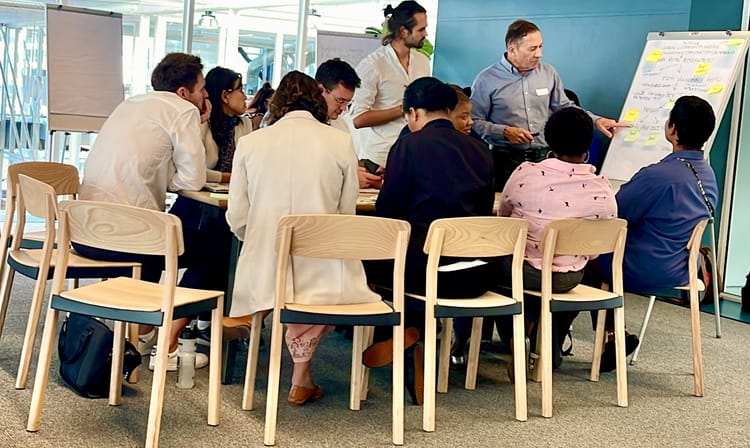
 IXO World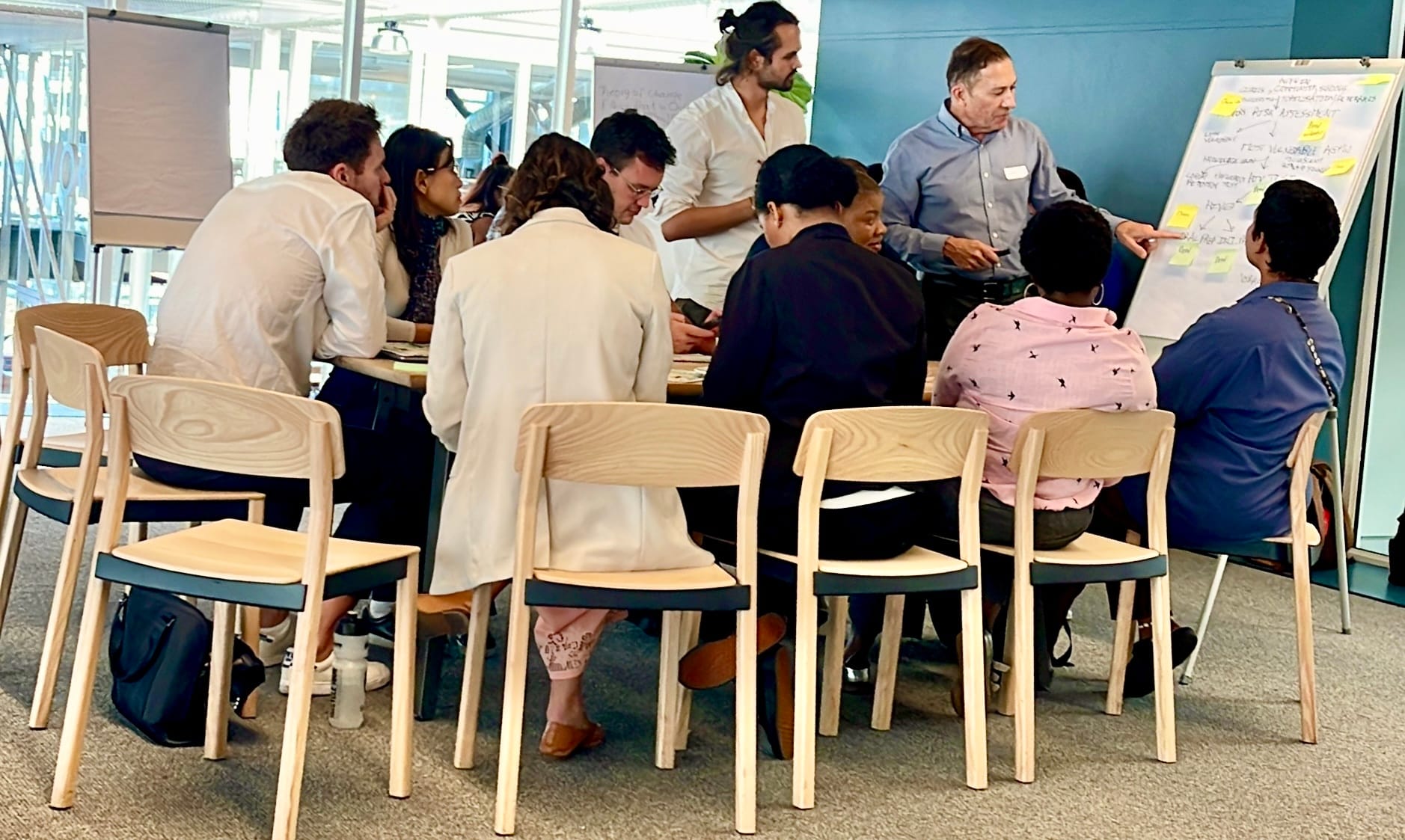
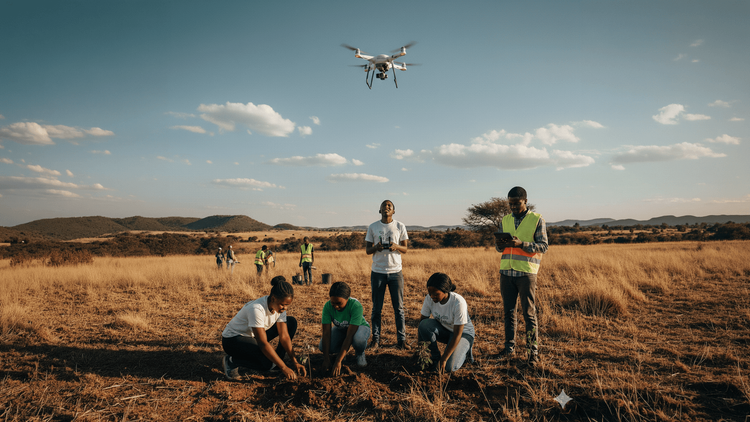
Moving beyond conversational AI, Outcome AI provides the accountable infrastructure to turn youth-led green initiatives into verifiable, fundable real-world impacts.
The liability of action
Everyone right now is obsessed with "agentic AI." But agency just tells you a system is capable of acting. It doesn't solve the hard part: what happens once it does.
If you are building toys, it doesn't matter. But the moment an AI touches money, rights, physical infrastructure, or institutional decisions, the bottleneck is no longer model intelligence. It is liability.
We didn’t invent this concept at IXO because of the recent chatbot boom. We’ve been hitting our heads against this specific wall for years. If a digital action matters in the real world, it has to be legible as a claim, testable against evidence, and verifiable as an outcome.
Look at climate systems. To prove an emissions reduction, you can't just take an agent's word for it. You need real-time field data, validated against strict protocol rules, producing an immutable record. The exact same pattern applies whether you're evaluating a project claim, settling a payment, or issuing a credential. The center of gravity has to move from generation (what did the model say?) to determination (what actually happened, and what is the proof?).
Primitives over wrappers
This is why we built Qi. It isn't a wrapper for talking to a model. It’s a computational model for human-agent cooperation, built on the premise that you cannot fake accountability with better logging.
You need protocol-level primitives.
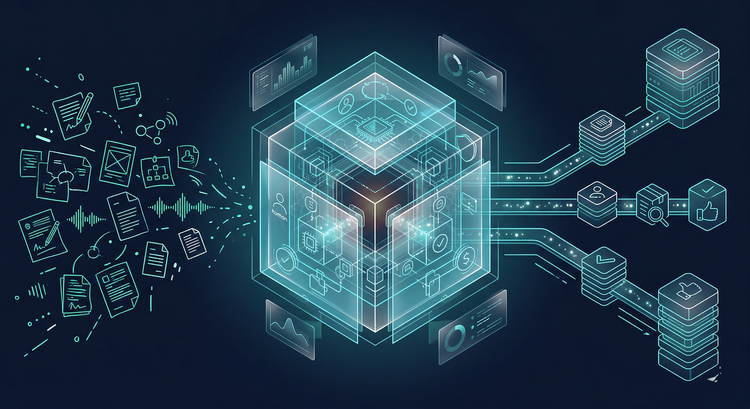
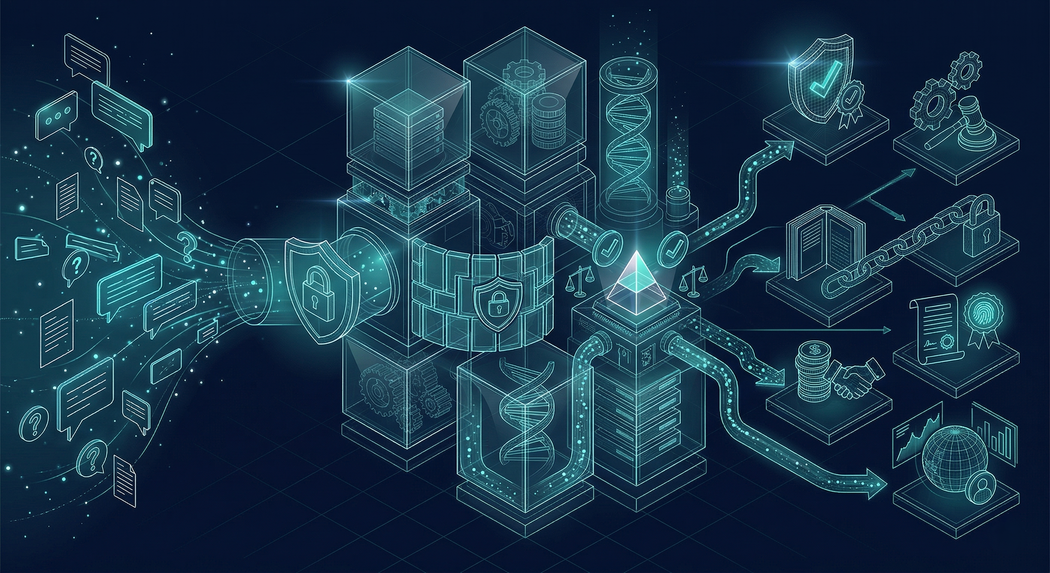
You need user-controlled authorisation networks (UCANs) to scope exactly who—or what—is authorised to act, with which capabilities, on which objects. You need structured Verifiable Claims to record the action. And you need a verification layer such as Universal Decision and Impact Determinations (UDIDs) to capture how that action was judged, backed by evidence and governed evaluation logic. It forces a closed loop: intent → action → evidence → verification → state update → settlement.
If the state doesn’t update, the work didn’t happen.
This is where the user experience and protocol layers have to meet. A tool-calling agent without memory starts from zero every time. An agent without editable artefacts is just a black box. You need collaborative workspaces and proof-linked execution trails, not status updates.
Memory makes the system useful. Protocols make it trustworthy.
 Dr Shaun Conway
Learn how we use UCANs and UDIDs to move from 'probabilistic' AI chat to an Expert Cognitive Twin that delivers high-fidelity, accountable results.
Accountability is the product
The first phase of the AI cycle was about abilities: can it code, write, or call tools? The next phase is strictly about guarantees: did the agent stay within its scope? Did the evidence hold up? Did the outcome satisfy the agreed rubric? Can a third party verify that independently?
Outcome AI, done properly, does not ask you to trust the agent. It gives you the cryptographic structures to verify what the agent was allowed to do, what it actually did, and what consequences followed. It doesn't remove human responsibility. It sharpens it.
Chat was the tutorial. Outcome is the product.
The winning systems of the next decade won't ask institutions to hand their agency over to a black box. They will wrap autonomy in proofs, protocols, and enforceable boundaries.
Three questions for anyone deploying agents into production today:
- What specific outcomes are you actually prepared to let a model determine?
- When the system makes a high-stakes error, what exact proof will you rely on to audit the failure?
- Are you building accountable infrastructure, or just a very smart chat interface?