

Pieter Pretorius is a Software Engineer at IXO building IXO Mobile and the Supamoto onboarding app.
Digital systems often assume ideal conditions: fast devices, stable connectivity, and clean data. This is rarely the case in the field.
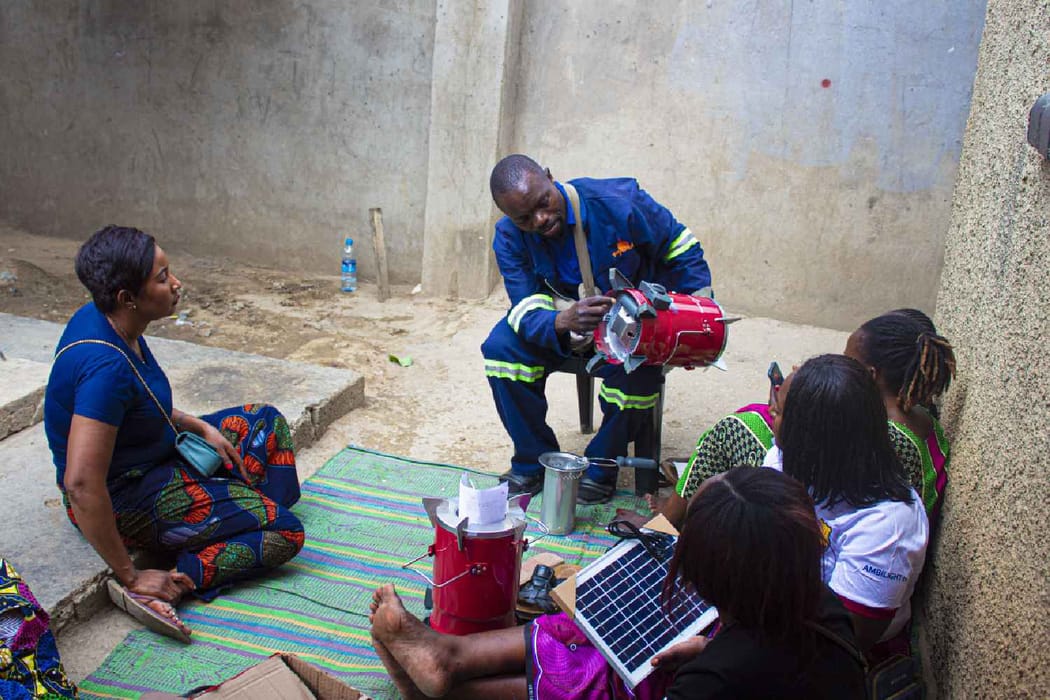
For Supamoto, a clean cooking and energy provider in Southern Africa, onboarding is a physical process. It is carried out by agents on lower-end devices under time pressure, with real financial consequences if errors occur. These agents work directly with households to verify data, explain contracts, and ensure stoves and fuel are delivered correctly. Their efficiency determines the success of the entire program.
 Alwyn van Wyk
As Supamoto migrated from a traditional Web2 system to IXO’s decentralised infrastructure, it became clear that onboarding could not be treated as a simple form. It had to become a verifiable, step-by-step process—resilient enough for the field and strict enough to maintain system-wide trust—while remaining intuitive for the agents.
This article explores how the Supamoto onboarding app was built by composing IXO components into a single system designed for the real world.
The Problem: Onboarding is a Process, Not a Screen
Supamoto’s onboarding journey begins long before a customer receives a stove. Leads arrive from multiple sources, including USSD flows and external systems. Field agents must screen customers, explain contracts, capture signatures, verify fee payments, perform home visits, assign stoves, and confirm fuel delivery.
Crucially, agents are not expected to understand blockchain concepts. The app abstracts this complexity, presenting a guided flow while the system enforces correctness in the background. Each step is interdependent: skipping one undermines trust, and reordering them breaks accountability.
In a traditional Web2 system, this often leads to opaque back offices and manual reconciliation.
IXO provides a way to make the process transparent and auditable without pushing technical complexity onto the field staff.
Designing for the Field
The app is built specifically for agents, which imposes several practical constraints:
- Hardware: Devices are often entry-level Android phones with limited memory and CPU.
- Connectivity: Access is frequently intermittent or slow.
- Pressure: Agents work in high-pressure environments where retries are costly.
- Privacy: Customer data must be protected by default.
These constraints shaped the architecture. Performance and resilience took priority over feature density. The goal was to compose IXO’s building blocks into a system that works reliably without requiring the agent to know the underlying infrastructure exists.
The Power of Composability
No single technology could solve this problem in isolation. A blockchain provides integrity but lacks user experience; forms capture data but not trust; and manual workflows fail to scale. What was needed was composability: the ability to assign responsibilities to different parts of the system and allow them to function behind a unified interface.
The System, End-to-End
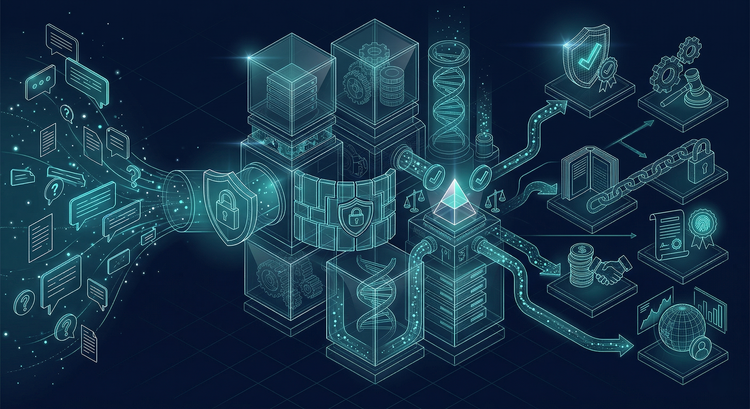
Rather than thinking in terms of features, the Supamoto onboarding app composes IXO components into intelligent and automated stateful process flows. By composing flows with blocks, we turn technical complexity into field-ready utility:
A Typical Journey
After being approved, a field agent opens the app to see a new lead. They screen the customer and capture signatures; these claims are then submitted and evaluated. Once approved, the customer pays an onboarding fee, which is verified and allocated. The agent then performs a home visit to ensure there are no stove assignment conflicts.
Only after these steps are verified is a stove assigned and the first fuel purchase confirmed. At the end of this process, the customer is verifiably part of the Supamoto system with a complete, auditable trail.
Lessons from Production
Building this system surfaced challenges that only appear in a production environment. Supporting low-end hardware required aggressive refactoring, which in turn highlighted technology limitations and drove further innovations in the core IXO components.
Addressing these issues didn't just improve the Supamoto app; it strengthened the entire ecosystem. For example, to enable direct media uploads, such as scanned documents, we refactored image processing with a more efficient codec to reduce payload sizes, which now improves performance for all users. Constraints in one application led to better abstractions for the whole network.
The most important lesson was that abstraction is a system requirement. The less agents need to know about the infrastructure, the more effective they become.

Why This Matters
The Supamoto onboarding app is just one example of how the IXO building blocks can be composed into real-world systems that need scale and reliability. The broader opportunity is not limited to clean cooking or energy.
Many real-world programs rely on complex, multi-step processes that are difficult to coordinate, audit, and scale using traditional systems. IXO is designed to support these kinds of workflows—providing composable infrastructure that can turn real-world actions into trusted digital states—without forcing that complexity onto the people doing the work.